Contact tips, nozzles, drive rolls, wire, tungsten and torches must be verified against the exact machine and torch model. This guide uses exact Amazon listing records, not hands-on welding tests. Seller specifications illustrate the questions to ask; they do not establish measured weld quality, and nothing here replaces the machine manual or a licensed electrician for any supply, circuit or receptacle question.
Start with the torch model, not the machine brand
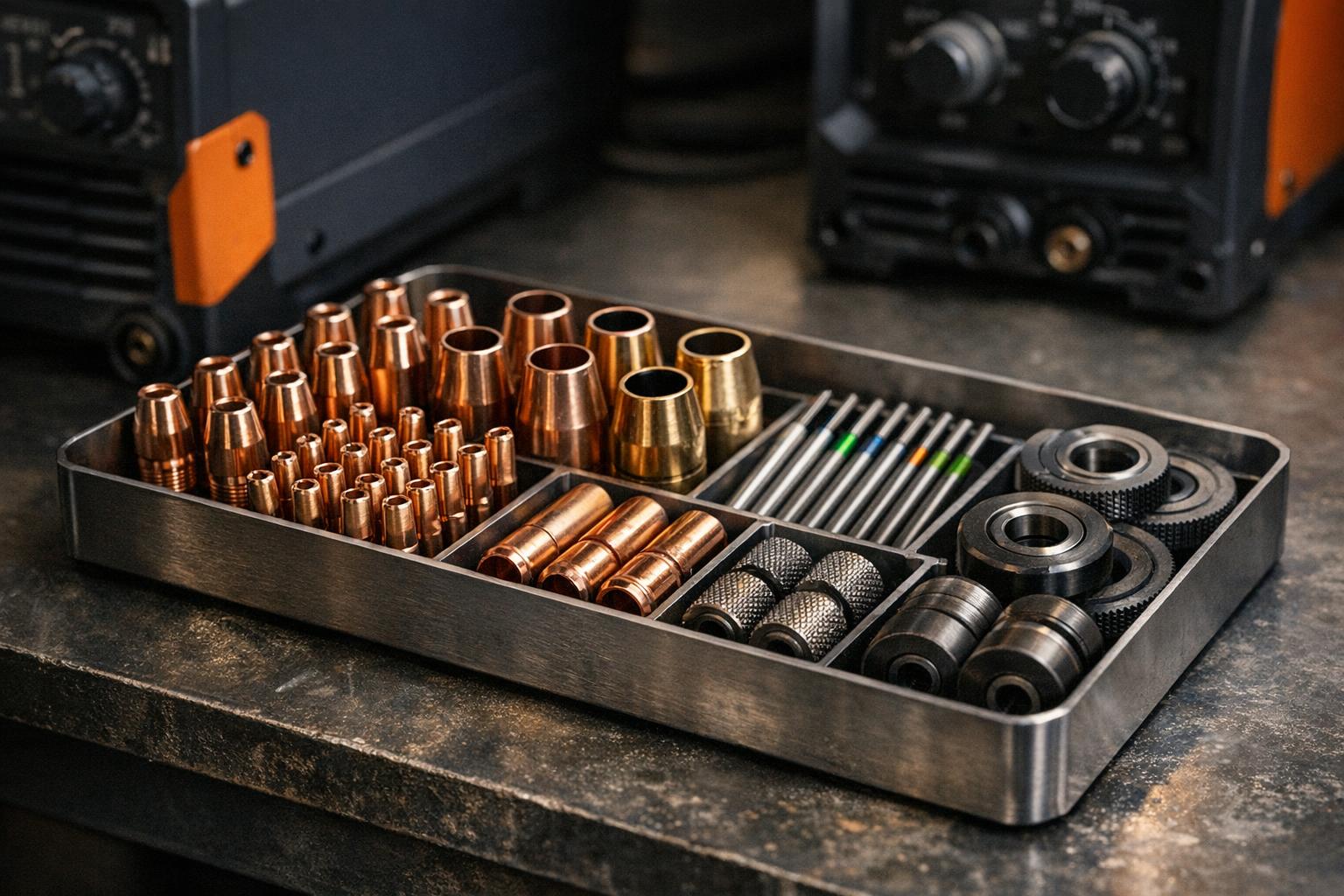
MIG consumables fit a torch, and the same brand sells several torch designs. The YESWELDER 0.035 tip kit record states compatibility with Lincoln Magnum 100L and Tweco Mini/#1 torches and lists specific YESWELDER machine models by name. That is the kind of statement to look for: an explicit model list. A kit described as universal without naming torches is a question to ask, not a confirmation.
Record the torch model that ships with your machine from its manual, then search consumables by that torch. Our MIG modes guide explains why spool guns and TIG torches have their own separate compatibility questions.
Wire: classification, diameter and spool size
A wire listing should state its AWS classification, diameter and spool weight. The PGN ER70S-6 record states 0.035-inch solid wire on a 10-pound spool; the YESWELDER E71T-GS record states a self-shielded flux-cored wire for mild steel. Check that the machine manual supports the diameter and that the spool size fits the wire compartment.
Solid and flux-core wire generally need different drive rolls and contact-tip sizes, and gasless operation typically requires a polarity change described in the manual. Do not infer any of these from a wire listing; the machine manual governs.
Gas equipment: fittings and flow units
The YESWELDER flowmeter record states a CGA-580 inlet for argon, helium and argon/CO2 mixes, a 0 to 60 CFH flow tube and both 9/16-inch and 5/8-inch outlet options. Those are fitting statements to compare with the cylinder valve and the machine's gas inlet. Pure CO2 cylinders commonly use a different valve, so confirm the fitting for the gas you will actually use.
Flow setting, leak checking and cylinder handling are described by the gas supplier and machine manual; this guide does not provide those steps. Treat a listing's leak-proof claim as a seller statement rather than a tested result.
TIG consumables depend on the torch series
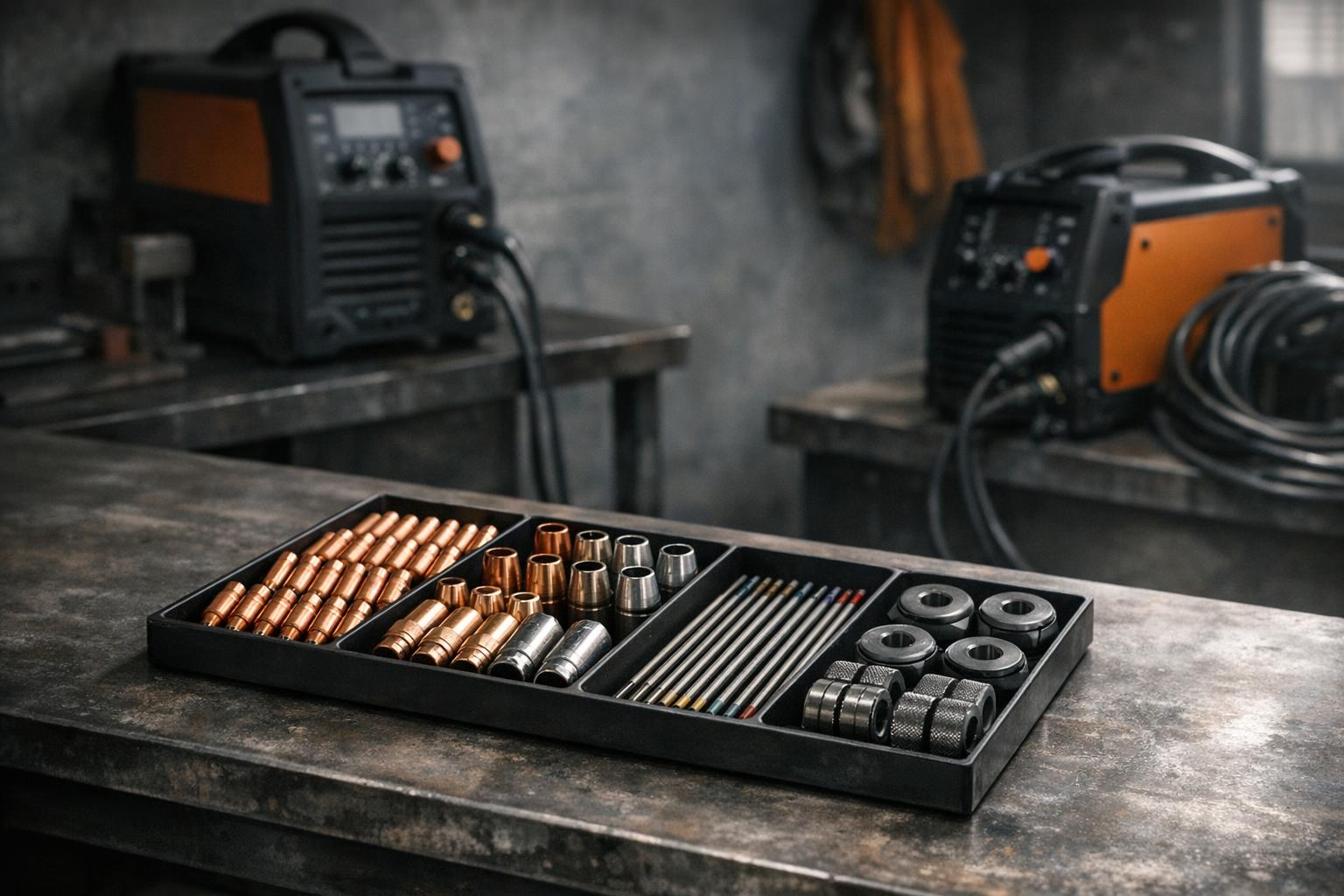
Tungsten diameter, collet, collet body, cup and back cap must match the torch series, which the machine listing may not name. Where a listing states a WP-17 or similar torch designation, use that to search consumables; where it does not, find it in the manual before buying. AC/DC machines for aluminum may also have tungsten-type recommendations in the manual.
Our AC/DC TIG guide covers included pedals and torches. Foot pedals are not consumables, but their connector is equally model-specific and should be confirmed the same way.
Keep a parts record for the life of the machine
Write down the machine model and revision, torch model, drive-roll sizes, contact-tip thread and size, nozzle type, wire classifications you use and the gas fitting, with the manual page for each. A future consumable purchase then starts from a record, not a photograph. If a listing's compatibility list does not name your torch, ask the seller or manufacturer before ordering.
Our accessories collection shows consumables as captured from exact listings and gives them no editorial score, as the methodology explains. Read the safety guide for protective equipment, which is a separate purchase list.
Drive rolls deserve their own line. A drive roll is sized to a wire diameter and grooved for a wire type: V-groove for solid wire, knurled for flux-core, U-groove for aluminum. The Miller Multimatic 220 record lists a flux-cored drive roll in its package; most listings say nothing. The manual states which rolls ship with the machine and which are optional. Never assume a roll from another brand fits, even when the wire diameter matches.
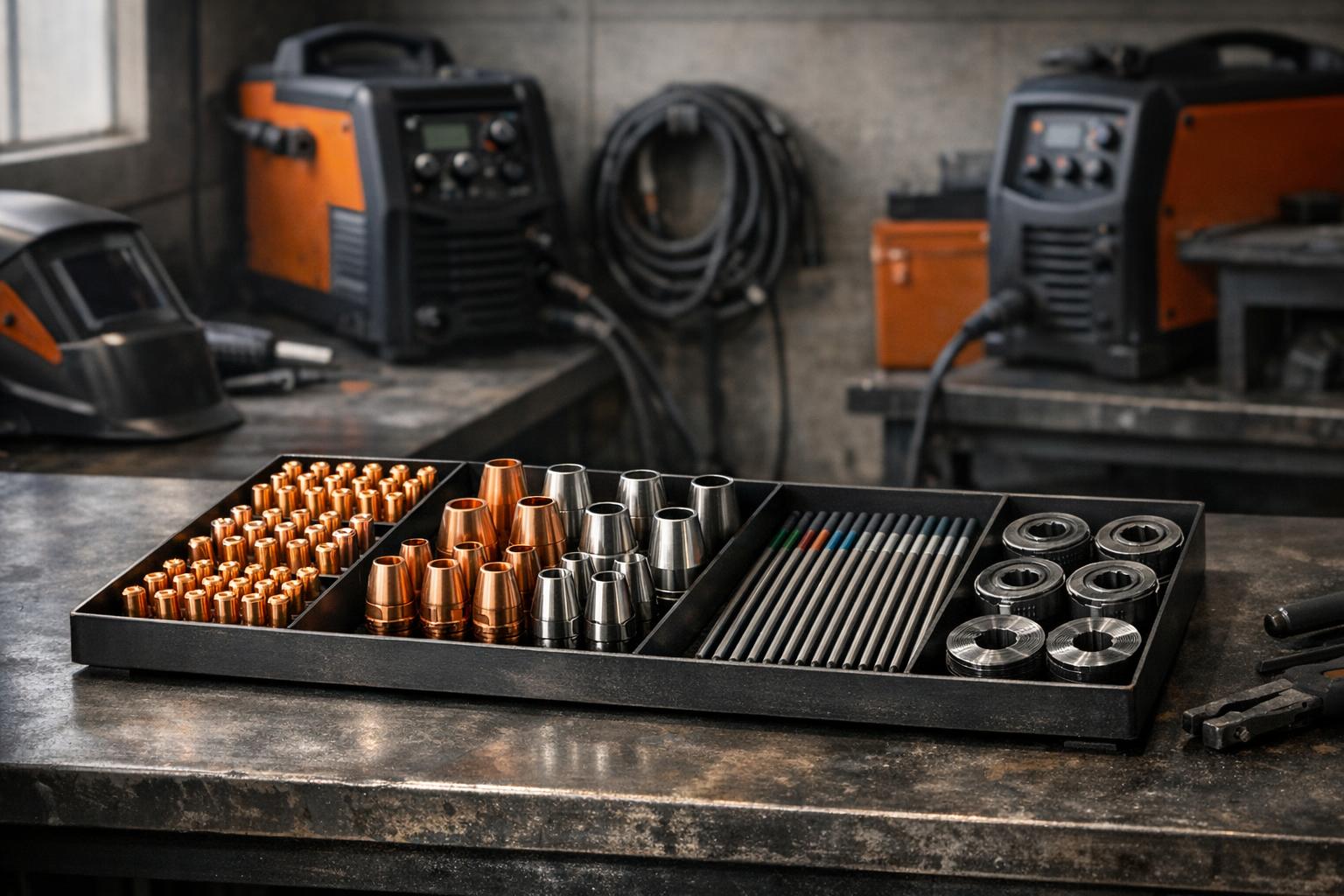
Contact tips also carry a thread and a body size that depend on the torch. The YESWELDER kit record names twenty 0.035-inch tips, two nozzles and two diffusers and asks buyers to match the nozzle size to their gun model. That instruction is worth following literally: a tip that threads in but is the wrong length or bore changes wire feeding and gas coverage. Record the tip part number from the manual and buy by that number.
When you cannot find a part number, photograph the existing consumable next to a ruler and contact the machine manufacturer with the model and revision. That takes longer than ordering a kit that looks similar, but it avoids a drawer of parts that almost fit. Our catalog can help identify exact listings; it cannot verify fit for your torch.