Compare all-in-one machines with MIG-only units on process needs, included parts, wire range and documentation, without invented performance results. This guide uses exact Amazon listing records, not hands-on welding tests. Seller specifications illustrate the questions to ask; they do not establish measured weld quality, and nothing here replaces the machine manual or a licensed electrician for any supply, circuit or receptacle question.
Decide whether the extra processes solve a real job
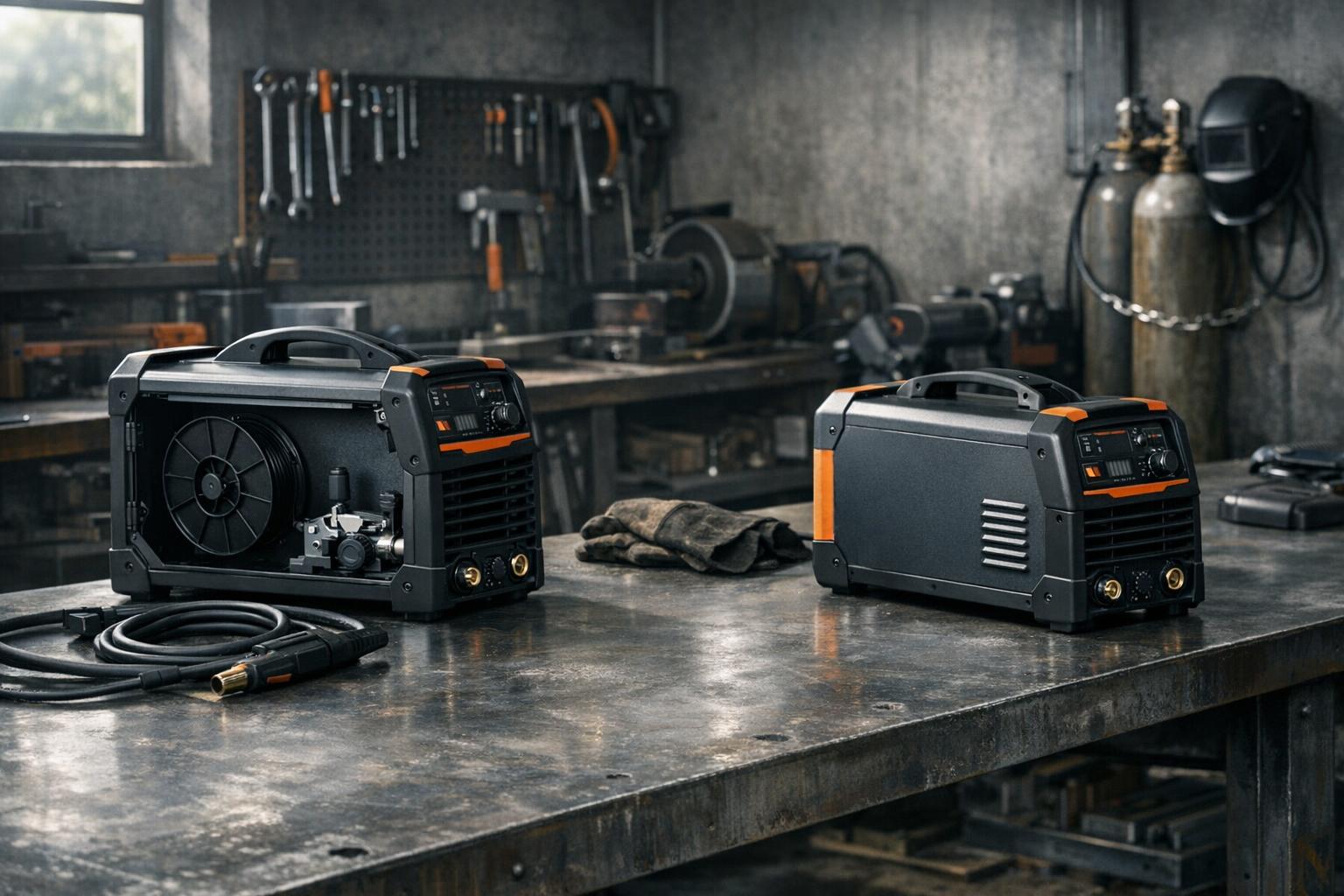
A dedicated MIG welder and a multiprocess unit can share the same wire-feed job and still be different purchases. Start with the question the machine must answer: if all of your work is steel wire welding, extra stick and TIG modes may never be used, while a repair shop that meets stainless, cast iron and thin sheet may value them. Write the list of processes you will actually run in the next year, then compare listings against that list rather than against the longest feature bullet.
The Hobart Handler 140EZ record presents itself as a 120V MIG and flux-core welder with an EZ Mode and a 24-gauge to 3/16-inch stated range. The ARCCAPTAIN MIG200 record lists six modes including stick, lift TIG and spot welding. Neither list is a weld-quality result. Our buying checklist starts from the joints, not the mode count.
Compare wire range and drive details, not just the badge
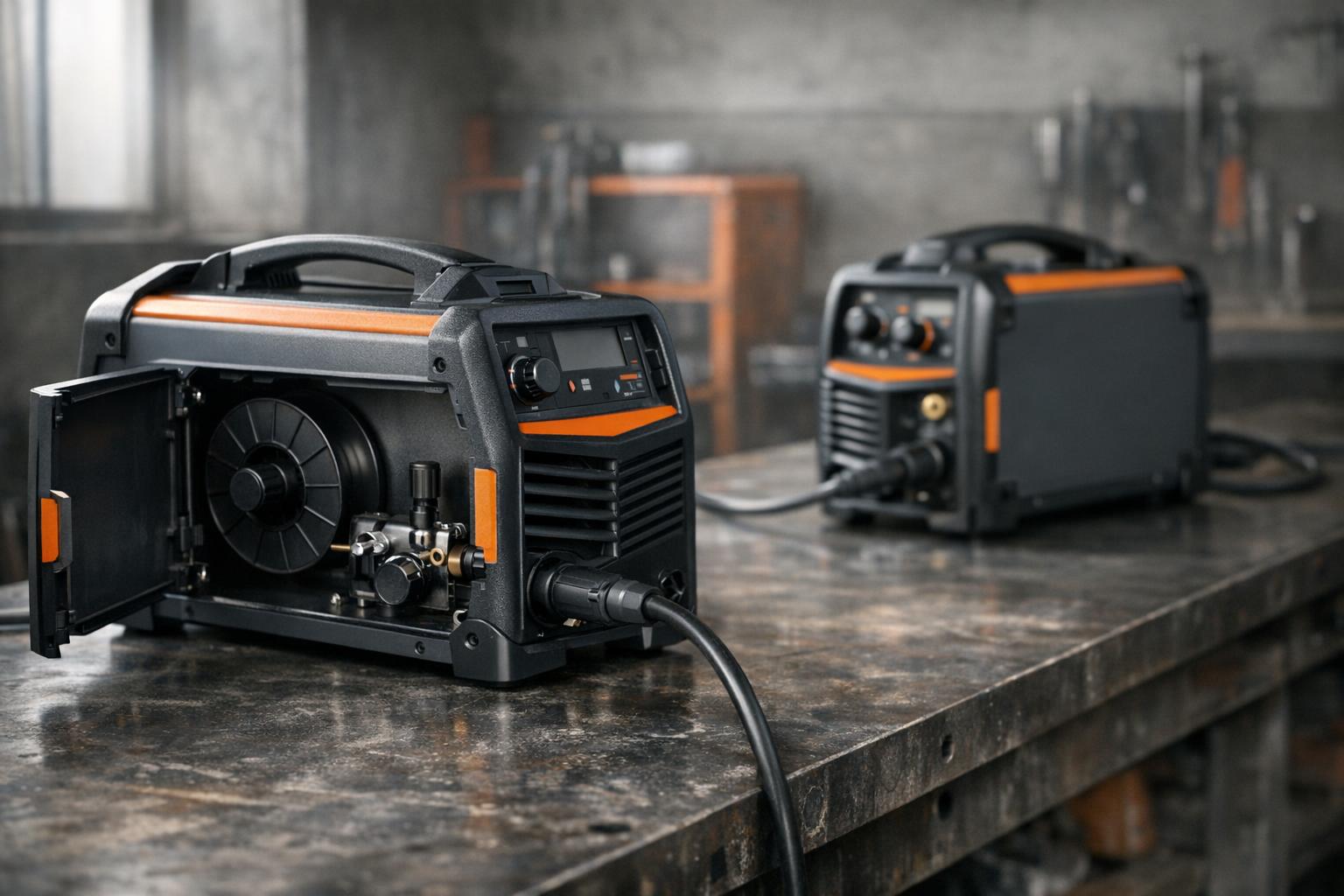
For wire welding, the documented wire-diameter range and drive design matter more than the number of processes. The Lincoln Power MIG 211i record states a cast-aluminum drive that feeds 0.025 to 0.045-inch wire and a 30% duty cycle at 175A. The ARCCAPTAIN record describes synergic control that matches current and wire speed to the selected diameter and gas. These are useful documented differences, not a measured feed-reliability comparison.
Ask the manual which drive rolls ship with the machine, which wire diameters they serve, and whether flux-core and solid wire need different rolls. Our MIG modes guide separates gas MIG, gasless flux-core and spool-gun operation, because a listing that names all three may still require a spool gun that is not in the box.
Weigh what is included for each process
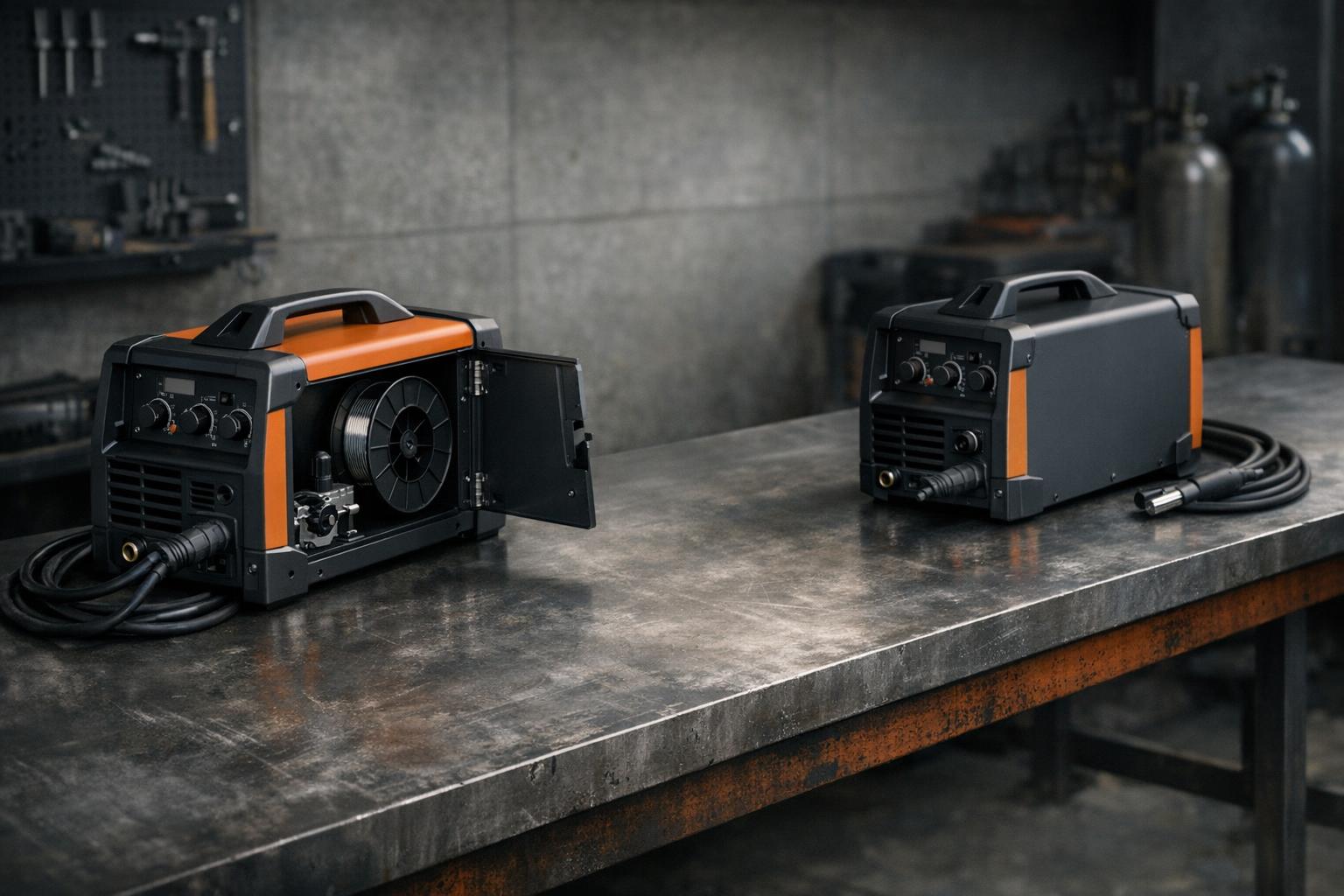
A multiprocess listing often lists TIG as a mode while noting that the TIG torch, regulator or foot pedal is sold separately. The ARCCAPTAIN MIG200 record says exactly that: the TIG gun and spool gun are not included. The Lincoln Power MIG 215 MPi record describes a built-in TIG solenoid and foot-pedal adapter, which tells you the machine is designed to accept a torch, not that one is supplied. Read the package line and price the missing items before comparing costs.
A dedicated MIG welder can be the simpler purchase precisely because everything for its single process is documented together. That is a question of setup and budget, not of superior welds. See the consumables guide for how to check torch fit and contact-tip compatibility for the exact model you choose.
Read duty cycle in the same units on both sides
When a MIG-only listing states its duty cycle at a specific amperage, as the Power MIG 211i record does at 175A, and a multiprocess listing states only a percentage, the two figures are not directly comparable. We show a duty cycle only where the listing supplies a percentage and note the amperage basis where stated. Do not assume a higher percentage on one listing means longer arc time at the amperage you intend to use.
The duty cycle guide explains the ten-minute convention, and the planner turns a stated percentage into arc-on minutes without adding any thermal assumption. Whichever category you choose, the manual's thermal-overload instructions decide when the machine may run, not the planner.
Choose using documentation gaps, not category slogans
Put the two candidates side by side with the same columns: processes you need, included torch and leads, wire range, stated maximum output, duty cycle with its amperage basis, input voltage and weight. Mark every blank as unknown rather than filling it from a similarly named model. If an essential column stays blank for one candidate, contact the manufacturer or drop it from the shortlist.
Our multiprocess comparison covers complete multiprocess machines with captured review evidence; dedicated MIG units live in the MIG and flux-core collection. The two pages answer different questions and should not be read as one ranking. The methodology explains what the editorial score does and does not measure.
One more column deserves attention: weight and case design. The Hobart record states 53 pounds; the Lincoln 215 MPi record describes a case with multiple lift points. A dedicated MIG machine and a multiprocess unit can differ by tens of pounds, which matters if the machine moves between a bench and a vehicle. Record the stated weight as a listing figure and confirm it in the manual, because bundles with carts or cylinders change the picture.
Finally, look at how each listing documents its controls. Seven-segment displays with two knobs, as the Lincoln 211i record describes, answer a different preference from a large LED screen with synergic presets. Neither is better in the abstract. Choose the interface you will be comfortable adjusting with gloves on, and verify from the manual that the settings you need are reachable without a phone app or hidden menu.
Sources and further reading
- Lincoln Electric Power MIG 211i MIG Welder – Dual-Voltage 120/230 V, 20-211 A Output, Flux-Cored Ready, Portable 41 lb Machine, Model K6080-1
- Hobart Handler 140EZ MIG Welder 120V, 30-140A, Flux-Core, Spool Gun Ready
- ARCCAPTAIN 200A MIG Welder 110V 220V 6 in 1 Aluminum Welding Machine MIG200
- Lincoln Electric K4876-1 POWER MIG 215 MPi Multi-Process Welder