Which is the best TIG and stick welder in 2026?
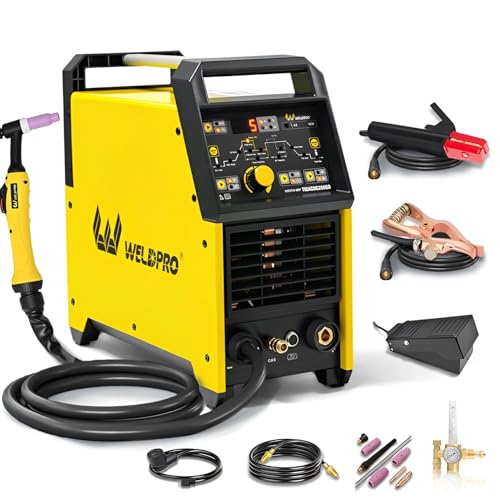
The Weldpro 200A AC/DC Pulse TIG Welder, at 9.4/10 (excellent). 836 buyers give it 4.6/5, and its listing states a 200 A maximum output, a 40% duty cycle at 200 A and dual-voltage input. The Sunstac 250A AC/DC TIG Welder follows at 7.7/10.
How is this ranking built?
The list starts from 23 TIG welders whose listing also names stick (MMA/ARC) welding and dedicated stick welders, with or without a buyer review record. Every machine carries the same rating as on its review page: owner reviews where there are enough, the listed specs where there are not. Our methodology page has the full detail.
Does a TIG welder need gas?
Yes. TIG needs pure argon, a cylinder and a regulator, plus a torch with a gas valve on most stick and TIG machines. Stick needs no gas at all, which is why so many boxes on this list offer both.
Is stick or TIG easier for a beginner?
Stick, for most people. It needs less gear and copes with dirty or outdoor steel. TIG gives cleaner, more precise welds but takes longer to learn and runs on argon.
How many of these welders state their duty cycle?
Only two of these 5 state one, so the manual has to fill in the rest. Read each percentage with the amperage it is rated at, or the comparison is meaningless.
Can you TIG weld with a stick welder?
Yes, if it is a DC machine that offers lift TIG, with a TIG torch that has a gas valve, argon and a regulator. Two of the 5 stick welders we rate name lift TIG in their listing.
What is the difference between a TIG welder and a stick welder?
Stick uses a flux-coated rod that shields itself, so it needs no gas and copes with dirt and wind. TIG uses a non-consumable tungsten, separate filler rod and argon gas, and gives cleaner, more precise welds that take longer to learn.
Are the prices up to date?
Yes, as of the date under each price. Stick and TIG machines go on sale often, so the listing has today's figure.